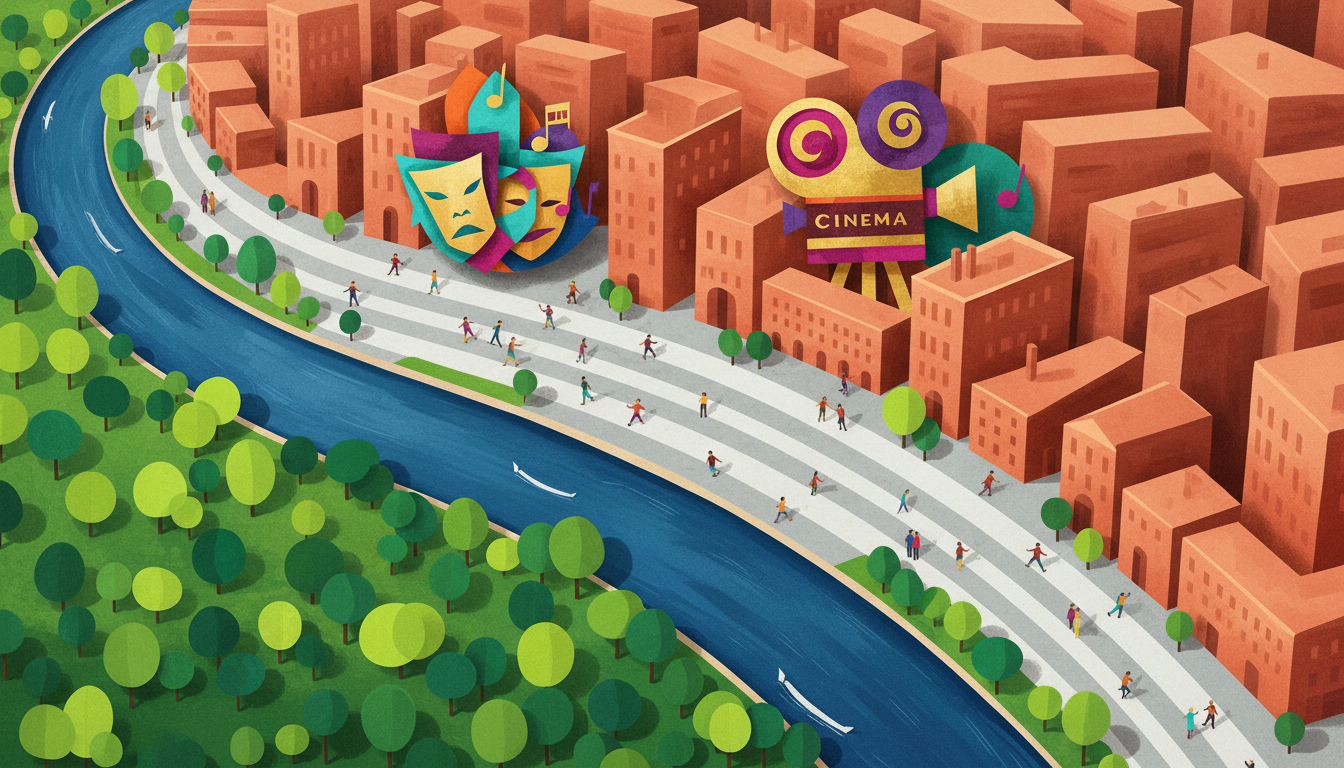

The most useful architectural feature around Lyon’s Le Pharaon casino may be the pedestrian street outside it. The property sits within the Cité Internationale, a district conceived to bring different activities together between the Rhône and Parc de la Tête d’Or. Its setting makes the casino part of a larger experiment in urban connection.
Renzo Piano Building Workshop’s project account describes a 15-hectare development commissioned in 1986. Buildings are arranged in pairs along a central pedestrian route. The plan creates visual and physical connections between park and river, while bringing together offices, housing, a congress centre, hotels, cinema, contemporary art and the casino.
The street as a shared room
That arrangement changes how the development can be understood. Each destination has its own purpose, but the spaces between them provide a common setting. Someone heading to a film, someone leaving work and someone walking towards the park can use the same public route without sharing a booking or itinerary.
The city’s description of the district credits both Renzo Piano and landscape architect Michel Corajoud. Including the landscape designer is essential to the story. Routes, planting and open space help turn a collection of buildings into a legible piece of city. Architecture and landscape work together at the level of movement.
Repetition, material and climate
RPBW identifies terracotta cladding and an additional outer layer of glass enclosing an air gap that acts as a heat exchanger. The facade therefore contributes to both the district’s appearance and its environmental strategy. Repeated materials can help visually connect different building uses, while the layered envelope adds a technical role behind that consistency.
These details give a visitor more to notice than a single signature building. The rhythm of paired blocks, the transitions between them and the changing relationship with the park all contribute to the experience of passing through the development.
A district assembled over time
Lyon’s tourism office dates Le Pharaon to 2000, placing it among facilities added in successive phases. RPBW’s broader project record extends from 1986 to 2006. The distinction helps explain why the Cité Internationale should be read as a long urban undertaking rather than a single opening-day event.
The casino’s own location description emphasises its position within this district near the park. Its architecture story is therefore inseparable from the shared public realm. Le Pharaon occupies one destination along a promenade whose wider purpose is to connect activities, buildings and landscape across the site.
Related property: Casino Partouche Lyon - Le Pharaon directory guide.
Leave a Reply