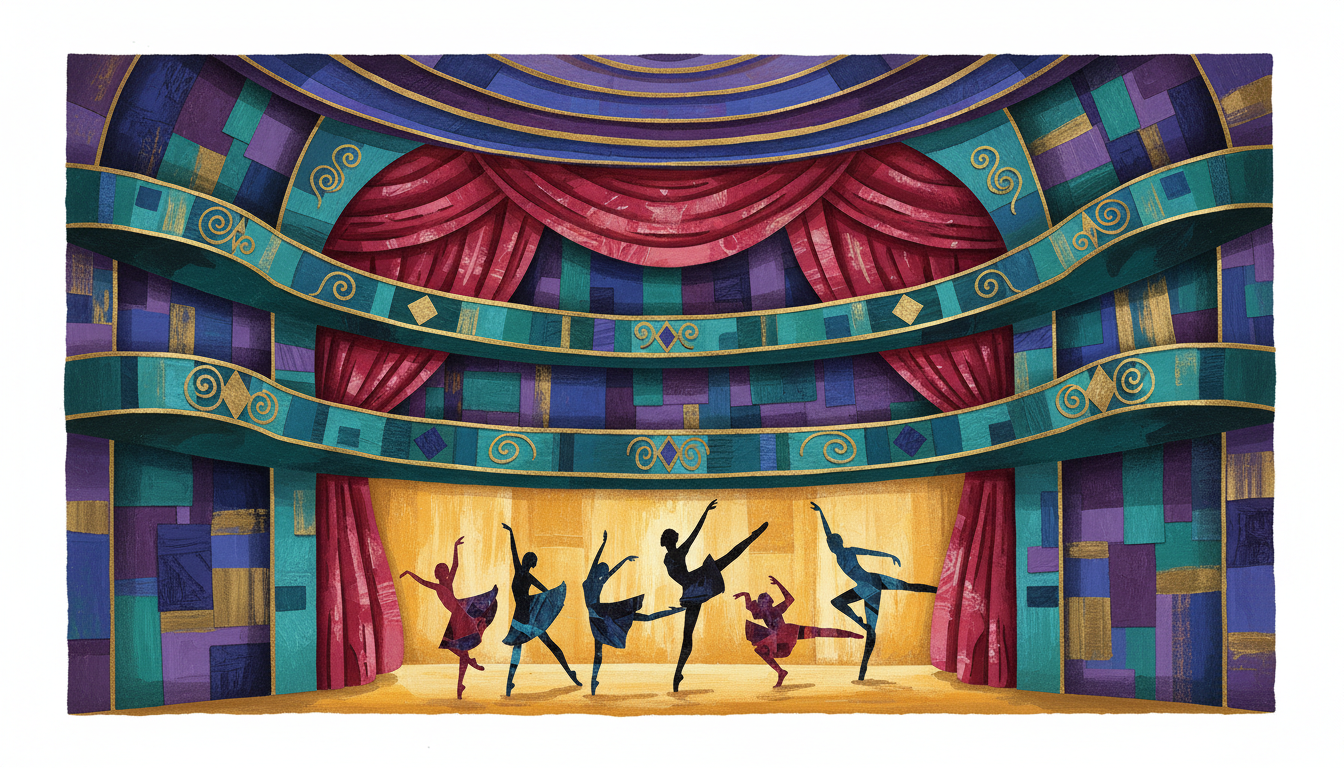

Deauville’s casino has the scale and presence of a grand resort building, but its theatre offers a more concentrated encounter with spectacle. Barrière describes it as an Italian-style auditorium built in 1912, using an eighteenth-century decorative language inspired by the Petit Trianon. It is a room designed to frame a performance, and to make the audience’s gathering part of the occasion.
That architectural date is revealing. The theatre’s style looks back beyond the period in which it was built. Its historic character therefore involves a deliberate act of selection: an earlier language of elegance was adapted to the expectations of a twentieth-century seaside resort.
An older language for a new resort audience
The operator’s theatre description supplies the useful formulation, “inspired by” the Petit Trianon. It allows the room to be understood as a designed interpretation, without treating every decorative detail as a literal copy or claiming the theatre dates from the eighteenth century.
Historic revival interiors work through such associations. Proportion, ornament and the relationship between stage and audience can suggest a world of ceremony even when a building serves a modern commercial purpose. At Deauville, that architectural frame gives performances a setting distinct from a neutral multipurpose hall.
A room that accommodates different voices
The regional tourism authority describes uses ranging from classical and contemporary dance to French song, musicals and solo comedy. Barrière’s own programme likewise spans theatre, concerts, humour and other live forms. The cultural value lies partly in this variety: a recognisable room becomes a recurring setting for different artistic encounters.
A stage’s identity does not come only from its most famous guest. It also develops through repetition. Audiences return to the same architectural frame while the voices, movement and pacing on stage change. That continuity allows the building to remain familiar without making its contents static.
The theatre within the larger building
Barrière’s account of its Deauville and Trouville properties places the small theatre within the 1912 casino alongside dining and other social spaces. This is an important part of the resort’s design history: performance belongs to the building’s mix of uses rather than being an incidental extra room.
Looking at the theatre also shifts attention from the casino’s exterior to the scale of a seated audience. The facade presents a public image across the street. The auditorium gathers people around a shared focus. Those two scales help explain how one building can be both an urban landmark and a place for a comparatively intimate evening of live performance.
Related property: Casino Barrière Deauville directory guide.
Leave a Reply